
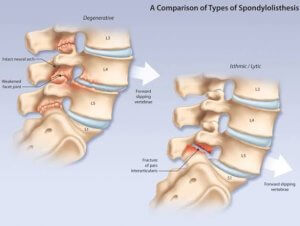
Spondylolisthesis forward translation
Spondylolisthesis Treatment in Arlington Heights
Spondylolisthesis is a spinal condition where one vertebra slips forward slightly over the bone beneath it. It most commonly occurs in the lower back, especially around the L4-L5 or L5-S1 levels. For some people, it causes very little pain. For others, it can create chronic lower back discomfort, stiffness, muscle tightness, nerve irritation, or pain that travels into the buttock or leg. Don’t Panic we have you covered.
At O’Hara Chiropractic in Arlington Heights, we often see patients who have been told they have spondylolisthesis after an X-ray, MRI, or previous medical evaluation. The name sounds intimidating, but in many cases, the goal is simple: reduce irritation, improve mobility where appropriate, support the spine, and help the patient move with less pain.
What Is Spondylolisthesis?
Spondylolisthesis means that one spinal bone has shifted forward compared to the one below it. This may happen because of age-related degeneration, a small stress fracture in part of the vertebra, previous injury, arthritis, disc changes, or long-term wear and tear.
The amount of slippage can vary. A mild case may remain stable for years. A more advanced case may require closer medical monitoring. That is why imaging and proper evaluation are important.
Common Symptoms of Spondylolisthesis
Symptoms may include:
- Lower back pain
- Stiffness after sitting, standing, or walking
- Tight hamstrings
- Pain into the buttock
- Sciatica-like leg pain
- Numbness or tingling in the leg
- Increased pain with bending backward
- Relief when sitting or leaning forward
Some patients feel pain mainly in the back. Others notice more leg symptoms if the slipped vertebra narrows the space around a nerve.
Can Chiropractic Care Help Spondylolisthesis?
Chiropractic care does not “put the bone back in place” in the way many people imagine. The goal is not to forcefully move an unstable segment. Instead, care is usually focused on improving function, reducing irritation, easing muscle tension, and helping the surrounding areas move better.
Depending on the patient, care may include:
- Gentle chiropractic adjustments
- Cox flexion-distraction technique
- Soft tissue work
- Stretching and mobility guidance
- Stabilization exercises
- Posture and activity modification
- Home care recommendations
At O’Hara Chiropractic, treatment is based on the patient’s age, symptoms, imaging findings, history, and comfort level.
When Spondylolisthesis Irritates the Nerves
If the slippage narrows the spinal canal or the openings where nerves exit, it may contribute to sciatica-like symptoms. This can cause pain, numbness, tingling, or weakness into the buttock, thigh, calf, or foot.
If you are experiencing progressive weakness, loss of bowel or bladder control, severe numbness, or rapidly worsening symptoms, you should seek urgent medical evaluation.
A Conservative Approach to Back Pain
Many people with spondylolisthesis do well with conservative care. The key is choosing the right type of treatment for the right patient. Some cases need gentle care and stabilization. Others may need medical referral, updated imaging, or co-management with another provider.
Our approach is simple:
Find the source of irritation, reduce stress on the spine, improve function, and help you understand what to do next.
Spondylolisthesis and Everyday Life
Patients often notice symptoms with:
- Prolonged standing
- Walking long distances
- Getting up from a chair
- Yard work
- Lifting grandchildren
- Bending backward
- Sleeping in certain positions
Small changes can make a big difference. Proper movement habits, core support, and avoiding repeated painful positions may help reduce flare-ups.
Schedule an Appointment
If you have been diagnosed with spondylolisthesis or have ongoing lower back pain, O’Hara Chiropractic in Arlington Heights can help evaluate your condition and discuss whether conservative chiropractic care is appropriate for you.
Call O’Hara Chiropractic today to schedule an appointment and find out what may be causing your lower back pain.