Herniated Disc Treatment in Arlington Heights
Herniated disc treatment
A herniated disc can cause more than lower-back or neck pain. When disc material irritates or compresses a nearby spinal nerve, symptoms may travel into an arm or leg and include pain, numbness, tingling, or weakness.
At O’Hara Family Chiropractic in Arlington Heights, Dr. Kevin O’Hara evaluates patients with suspected disc problems to determine what appears to be causing their symptoms and whether conservative chiropractic care is appropriate.
The goal is straightforward:
Find the problem.
Fix the problem.
Leave it alone.
If you have persistent back or neck pain, pain traveling into an arm or leg, or symptoms that have not improved as expected, identifying the source is an important first step.
What Is a Herniated Disc?
The discs between the bones of the spine act as cushions and help allow normal spinal movement.
Each disc has a tougher outer portion surrounding a softer inner portion. A disc can become damaged, bulge outward, or develop a herniation in which disc material extends beyond its normal boundaries.
A herniated disc does not always cause pain.
Symptoms are more likely when the disc irritates nearby tissues or affects a spinal nerve.
What Causes a Herniated Disc?
Disc injuries can develop gradually or occur after a specific event.
Factors may include:
- Repetitive lifting or bending
- Twisting while lifting
- Degenerative changes within the disc
- Prolonged mechanical stress
- Falls or other injuries
- Age-related changes in the spine
Sometimes there is no obvious single event. A patient may simply notice back or neck pain that begins to travel into an arm or leg.
What Does a Herniated Disc Feel Like?
Symptoms depend on where the disc problem occurs and whether a nerve is involved.
A lumbar disc herniation in the lower back may cause:
- Lower-back pain
- Buttock pain
- Pain traveling down one leg
- Numbness or tingling
- Burning or electric-like sensations
- Leg or foot weakness
- Increased symptoms with certain positions or movements
When a herniated disc irritates a nerve in the lower back, the resulting symptoms are often described as sciatica.
A cervical disc herniation in the neck may cause:
- Neck pain
- Shoulder or upper-back pain
- Pain traveling into the arm
- Numbness or tingling in the hand or fingers
- Arm or hand weakness
Bulging Disc vs. Herniated Disc
The terms “bulging disc” and “herniated disc” are sometimes used interchangeably, but they do not describe exactly the same thing.
A bulging disc generally refers to a broader outward extension of the disc.
A herniated disc generally involves a more localized area where disc material extends beyond its normal boundary.
The important question is not simply what the MRI calls the disc.
What matters clinically is whether the disc finding corresponds with the patient’s symptoms and examination.
Many people have disc changes on imaging without significant pain.
What I Commonly See With Disc Problems
Patients sometimes arrive in our Arlington Heights office worried because an MRI report says they have a bulging or herniated disc.
The imaging is important, but I do not treat an MRI report.
I treat the patient.
A disc abnormality on an MRI does not automatically tell us how much pain someone should have or which treatment will help them.
I look at where the patient hurts, whether symptoms travel into an arm or leg, strength, sensation, movement, neurological findings, and how the patient’s symptoms relate to what is seen on imaging.
That helps determine whether the disc appears to be responsible for the patient’s symptoms and whether conservative treatment is appropriate.
— Dr. Kevin O’Hara
Can a Herniated Disc Heal Without Surgery?
Many people with disc-related pain are initially managed conservatively rather than surgically.
The appropriate treatment depends on factors such as the severity of symptoms, neurological findings, the location of the disc problem, and how the patient is functioning.
For appropriate patients, conservative care may focus on reducing mechanical irritation, restoring comfortable movement, improving strength and stability, and gradually returning to normal activity.
Some cases require additional medical evaluation, medication, injections, or surgical consultation.
The purpose of the examination is partly to determine which type of care makes sense.
Can a Chiropractor Help With a Herniated Disc?
Chiropractic treatment may be appropriate for some patients with disc-related neck or lower-back pain.
At O’Hara Family Chiropractic, treatment is based on the patient’s examination rather than using the same technique for every disc problem.
Care may include:
Cox Flexion-Distraction
Dr. O’Hara uses Cox flexion-distraction, a controlled form of spinal decompression that allows the doctor to gently mobilize specific areas of the spine.
The treatment table moves while the doctor directs controlled motion to the affected area.
This technique may be considered for appropriate patients with:
- Disc-related back pain
- Herniated or bulging discs
- Sciatic nerve symptoms
- Certain cases of spinal stenosis
- Restricted or painful spinal movement
Not every disc condition should be treated the same way, which is why the examination comes first.
Chiropractic Adjustments
When appropriate, chiropractic adjustments may be used to improve movement in restricted spinal joints.
The technique selected depends on the patient’s condition, comfort, examination findings, and whether nerve involvement is present.
Therapeutic Exercise
Exercises may be used to improve spinal stability, strength, mobility, and tolerance for normal daily activity.
Exercise recommendations are adjusted according to the patient’s condition and stage of recovery.
Herniated Disc and Sciatica
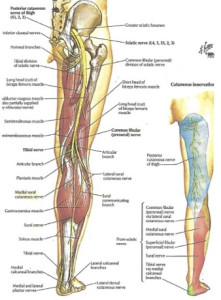
A lumbar herniated disc is one possible cause of sciatica.
When a disc irritates one of the nerve roots that contributes to the sciatic nerve, pain may travel from the lower back or buttock into the thigh, calf, or foot.
Patients may also experience numbness, tingling, burning sensations, or weakness.
However, not every case of sciatica is caused by a herniated disc.
Spinal stenosis, degenerative changes, and other conditions may produce similar symptoms, which is why determining the source matters.
When Should You Have a Disc Problem Evaluated?
Consider an evaluation if you experience:
- Persistent lower-back or neck pain
- Pain traveling into an arm or leg
- Numbness or tingling
- Recurrent episodes of back or neck pain
- Difficulty sitting, standing, walking, or sleeping comfortably
- Symptoms that repeatedly return
- Pain that interferes with work or normal daily activity
An evaluation can help determine whether the symptoms appear to be related to a disc problem and whether conservative treatment is appropriate.
When Is a Herniated Disc an Emergency?
Certain neurological symptoms require prompt medical attention.
Seek immediate medical evaluation for:
- Significant or rapidly progressing muscle weakness
- Loss of bowel or bladder control
- Numbness in the groin or saddle region
- Severe or rapidly worsening neurological symptoms
These symptoms may indicate significant nerve compression and should not be treated as routine back pain.
Herniated Disc Treatment Near You in Arlington Heights
At O’Hara Family Chiropractic, Dr. Kevin O’Hara evaluates patients with disc-related neck pain, lower-back pain, sciatica, and other symptoms associated with spinal nerve irritation.
The goal of the examination is to understand what appears to be causing the symptoms and determine whether chiropractic care, Cox flexion-distraction, therapeutic exercise, or another conservative approach is appropriate.
If the examination indicates that additional imaging or medical evaluation is needed, that is part of the decision-making process as well.
Dr. O’Hara takes the time to explain what he finds and why a particular treatment approach is being recommended.
Schedule an Evaluation for a Herniated Disc
If you have been diagnosed with a herniated or bulging disc — or you are experiencing back or neck pain that travels into an arm or leg — an evaluation can help determine what may be causing your symptoms.
Contact O’Hara Family Chiropractic in Arlington Heights to schedule an appointment with Dr. Kevin O’Hara.
O’Hara Family Chiropractic
Dr. Kevin O’Hara
940 S. Arthur Ave.
Arlington Heights, IL 60005
847-577-3597
What Patients Are Saying
Use one or two of your real Google reviews that specifically mention a disc problem, sciatica, leg pain, decompression, or avoiding surgery.
Your existing review from the Sciatica page that begins:
“Dr. O’Hara is truly incredible. I was dealing with a bulging disc issue…”
would be especially relevant here.