
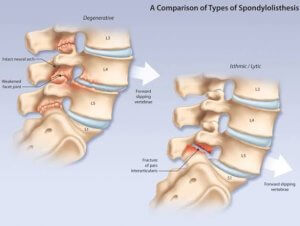
Spondylolisthesis forward translation
What Is Spondylolisthesis?
Spondylolisthesis is one of those terms that sounds more complicated than it really is.
When patients hear it for the first time, it often creates concern. It sounds serious, maybe even alarming.
But at its core, the definition is straightforward.
Spondylolisthesis refers to a condition where one vertebra in the spine slips forward over the one below it.
Most often, this occurs in the lower back.
At O’Hara Family Chiropractic in Arlington Heights, we see this condition regularly, and one of the first things we do is help patients understand what it actually means—and what it does not mean.
What Is Actually Happening in the Spine
Your spine is made up of a series of bones called vertebrae, stacked on top of each other.
Between them are discs that act as cushions, and behind them are joints that allow movement.
In spondylolisthesis:
• One vertebra shifts forward
• Alignment changes
• The way the spine moves is affected
This shift can be small or more noticeable, depending on the severity.
Types of Spondylolisthesis
There are several types, but the most common include:
Degenerative
This is the most common type and tends to occur with age. Over time, joints and discs wear down, allowing one vertebra to move forward slightly.
Isthmic
This type is often related to a small stress fracture in part of the vertebra. It may develop earlier in life but become symptomatic later.
Congenital
This occurs when the spine forms differently at birth.
Most patients we see fall into the degenerative category.
Common Symptoms
Some people with spondylolisthesis have no symptoms at all.
Others may experience:
• Lower back pain
• Stiffness
• Tightness in the muscles
• Pain with standing or walking
• Pain that improves with sitting
• In some cases, pain into the legs
The symptoms often depend on how much the vertebra has shifted and whether nerves are affected.
Why It Causes Pain
Pain from spondylolisthesis usually comes from a combination of factors.
• Joint irritation
• Muscle tension
• Changes in movement patterns
• Possible nerve involvement
As the spine compensates for the shift, surrounding muscles tighten to stabilize the area. That tension can create ongoing discomfort.
Is It Dangerous?
This is one of the most common questions.
In many cases, spondylolisthesis is manageable and not dangerous.
The degree of slippage is important. Many people live with mild to moderate cases without needing surgery.
The key is managing symptoms and maintaining function.
How It’s Diagnosed
Spondylolisthesis is usually identified through imaging, such as X-rays.
This allows us to see:
• The position of the vertebrae
• The degree of slippage
• Changes in alignment
Once identified, the focus shifts to how it is affecting your movement and symptoms.
How Chiropractic Care May Help
Chiropractic care does not “push the vertebra back into place” in the way some people imagine.
Instead, care focuses on:
• Improving motion in surrounding joints
• Reducing muscle tension
• Supporting better movement patterns
• Reducing stress on the affected area
The goal is to help the spine function as efficiently as possible despite the structural change.
At O’Hara Family Chiropractic in Arlington Heights, care is tailored to the individual, taking into account the degree of slippage and symptoms.
Daily Habits Matter
Managing spondylolisthesis often comes down to how you move and live day to day.
Helpful habits include:
• Staying active
• Avoiding prolonged sitting
• Using proper lifting techniques
• Maintaining flexibility
• Supporting core strength
The more balanced your movement, the less stress on your spine.
When to Seek Care
If you are experiencing:
• Persistent lower back pain
• Pain that worsens with standing or walking
• Stiffness that does not improve
• Pain radiating into the legs
It is worth having your spine evaluated.
Early management often leads to better outcomes.
Final Thoughts
Spondylolisthesis may sound complicated, but it is a manageable condition for many people.
It simply means that one vertebra has shifted slightly forward.
What matters most is how your body responds to that change.
At O’Hara Family Chiropractic in Arlington Heights, care focuses on helping your spine move better, reducing discomfort, and improving function.
If you have been told you have spondylolisthesis—or suspect you might—it is worth understanding your options.
Because even with structural changes, your body can still function well.